
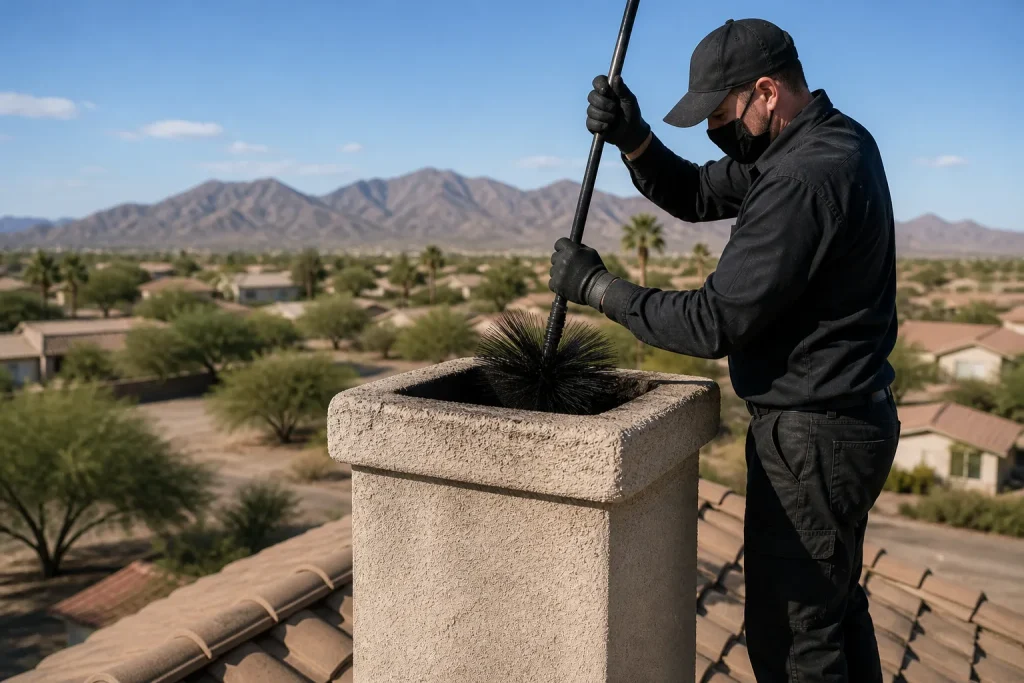
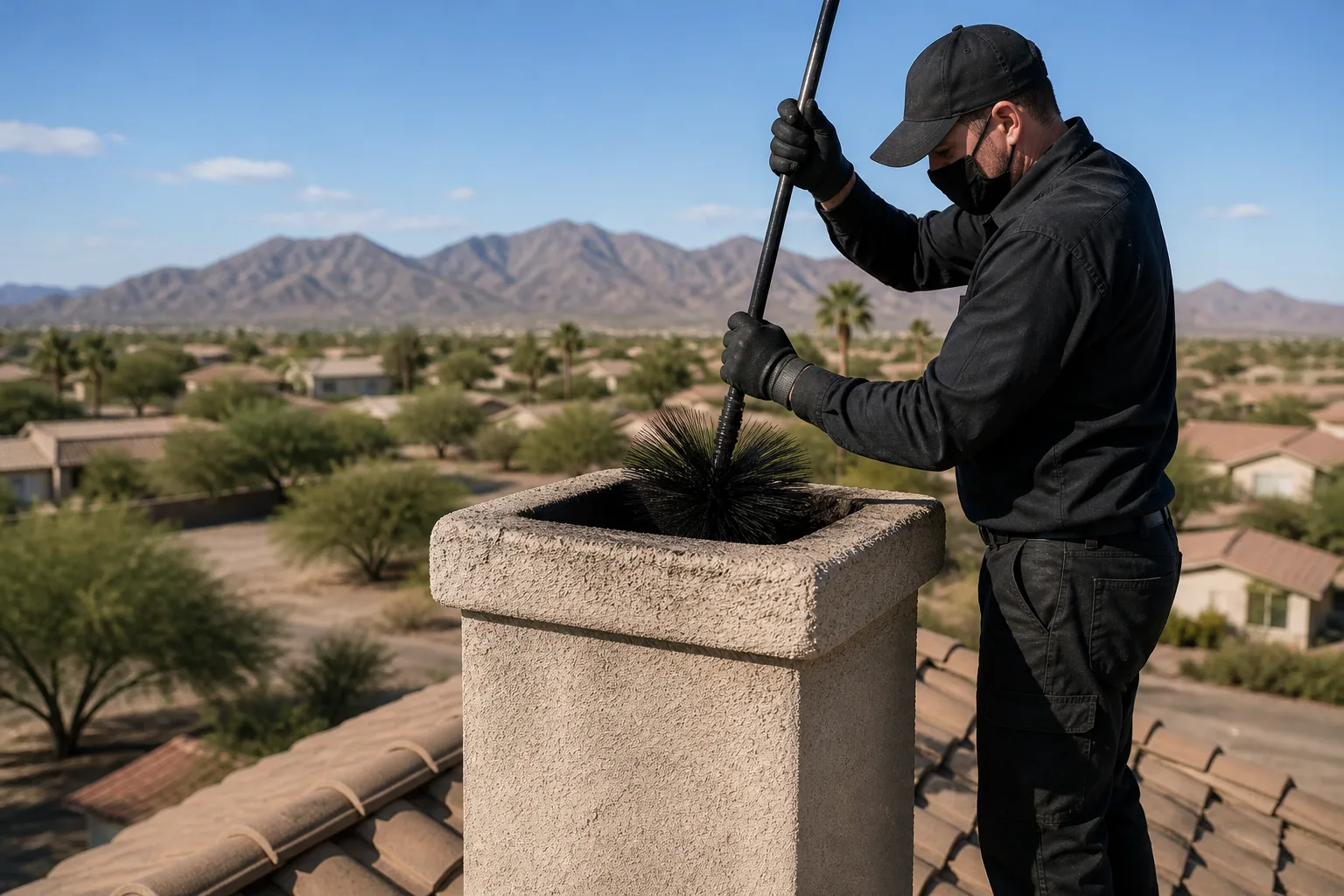
Famco Chimney Sweep in Buckeye: A Homeowner’s Guide
Most homeowners never think about the cap on top of their chimney until something goes wrong with it. It’s the least visible part of the whole system, and yet it takes the worst beating from the Arizona sun, wind, and dust. This guide is about Famco chimney products: what they are, why chimney specialists reach for them, and how to know what’s on your own chimney before a technician ever climbs up. If you’d rather have someone take a look, call us at (866) 378-9837.
What does Famco make, and why do chimney sweeps choose it?
Famco manufactures the metal components that protect and finish a chimney: caps, top-sealing dampers, termination caps, and flashing. These aren’t glamorous products, but they’re the parts that decide whether water, animals, and sparks get where they shouldn’t. Chimney specialists tend to specify Famco over the generic hardware sitting on a big-box shelf because the tolerances are tighter and the materials are meant for the job.
The difference shows up in small things. A cap built to a real specification has a screen that fits tightly, welds that hold through years of sun, and a mounting system designed for an actual chimney rather than a universal bracket that almost fits. When we sweep, inspect, and repair, we work with brands the chimney trade relies on for exactly this reason: DuraFlex for flexible liner systems, HeatShield for liner resurfacing, and Famco and Gelco for caps and covers. We don’t just find a problem and hand you a list. We fix it with the right materials.
What matters for you as a Buckeye homeowner is that the brand on your cap tells a technician something. Builder-grade hardware signals “this was the cheapest option that passed at construction.” A professional-grade component signals someone specified it on purpose. That’s the level of care worth having on a chimney in this climate.
How does Arizona weather wear out a standard chimney cap?
Buckeye’s weather is hard on metal. Afternoons push past 110°F in summer, nights drop fast, and the swing repeats day after day. That thermal cycling works a cap the way bending a paperclip back and forth works the wire. Add intense UV that breaks down coatings and dust-laden wind that scours and clogs screens, and you have a component that ages faster than most people expect.
Standard galvanized caps are the most common victim. The zinc coating that protects the steel slowly wears away, rust sets in, and the cap starts to look tired within a handful of years. Stainless steel Famco products hold up far better against that same cycle because there’s no coating to fail; the metal itself resists corrosion. It’s not that a galvanized cap falls apart overnight. It’s that the difference in service life is real, and it shows up specifically in climates that combine heat, UV, wind, and dust the way Buckeye does.
When you weigh a cap replacement, the material question isn’t academic. It’s the difference between doing the job once and doing it again sooner than you’d like.
Does an outside mount cap affect draft differently than an inside mount?
Yes, and the difference matters in a windy place. An outside mount cap sits over the flue and fastens to the chimney crown or the top of the flue tile. An inside mount cap fits down into the flue itself. Both can work, but they behave differently when wind hits the chimney top.
An outside mount cap tends to handle wind more predictably because the connection is more stable and the cap isn’t relying on friction inside the flue. In a place with dust-laden wind and open exposure like much of Buckeye, a cap that stays put and shields the flue opening properly helps the chimney draft the way it should. A loose or poorly fitted cap can let wind-driven debris and moisture straight down the flue, and that’s where you start seeing draft problems, odors, and water where it doesn’t belong.
This is one of those details a trained eye reads quickly. The mounting style tells you whether the cap was chosen for the chimney or just grabbed off a shelf.
How do you identify the brand and condition of your current cap or flashing?
You can learn a lot without climbing anything. Start with a pair of binoculars from the yard and work through these checks:
- Look for a maker’s mark. Many professional caps carry a stamped brand name or logo on the skirt or the screen frame. Seeing a name like Famco or Gelco means someone specified a quality component.
- Check the mounting style. Is the cap sitting over the flue tiles, or fitted down inside them? That tells you the mounting type.
- Look at the metal. Rust streaks, flaking coating, or a dull chalky finish on galvanized steel are signs the protective layer is gone.
- Check the screen. Sagging, torn, or clogged mesh means the cap isn’t doing its job on wildlife or sparks.
- Inspect the flashing at the roofline. Lifted edges, cracked sealant, or rusted flashing at the base of the chimney are where leaks usually begin.
If you spot any of these from the ground, it’s a good reason to have the whole chimney looked at during your next chimney sweep. A trained technician reads condition and brand in person in a way binoculars can’t quite match.
Why upgrade a component during a sweep instead of booking a separate repair?
Here’s the scheduling math that matters for a Buckeye homeowner. A sweep is already a visit to your chimney with a technician on the roof, tools in hand, and the whole system in view. If that same visit turns up a cap that’s past its useful life, replacing it then means one trip instead of two. Booking it separately means another appointment, another window of time you set aside, and the same access work done twice.
That’s the practical case for pairing a component upgrade with routine maintenance. The chimney gets inspected, swept, and, where needed, repaired as a single arc. We sweep, inspect, and repair, start to finish, one team, so there’s no bouncing between a cleaner and a repair specialist. Whether it’s a cap, flashing, or a full relining job using DuraFlex flexible liner systems, the work happens with people who do this every day.
It also means the decision is informed. You’re not told a cap is failing in isolation. You see the whole chimney and understand why the recommendation makes sense.
What condition signs mean it’s time to replace a cap or flashing?
Some warning signs are unambiguous. Rust-through, a cap that’s come loose or tilted, a screen that’s torn or clogged beyond cleaning, or water stains on the chimney interior all point toward replacement. Flashing that’s separated from the roof or chimney, or caulk that’s cracked and pulling away, needs attention before it lets water in.
Others are softer. A cap that looks fine but sits on a chimney with recurring draft issues may be the wrong type for the flue. Screen mesh that clogs fast in dusty wind may be undersized. These are the judgment calls that come from experience.
Our technicians have up to 15 years of experience, and they’ve learned to tell “tired but serviceable” from “this is causing problems.” That distinction keeps you from replacing something that has years left and from trusting something that’s already failing.
When should you call a pro instead of checking it yourself?
The chimney top is one of those places where a fall or a wrong move can go badly. Roof access, heights, and a dusty surface are a bad combination, and flashing work involves sealing details that have to be right or they leak again. This is not a job worth a ladder from the garage and a Saturday afternoon.
Call a professional when you see rust-through, water stains, a loose cap, or flashing that’s pulling away. Call if you can’t tell what’s on the chimney from the ground and want to know before it becomes a problem. And call if it’s simply been a while since the chimney was looked at, since a cap and flashing check comes free with a routine chimney repair or sweep visit.
Related services in Buckeye: chimney sweeping, chimney inspection, and chimney repair, all handled by one team.
How do you choose the right cap material for a Buckeye chimney?
Match the material to what the climate throws at it. Stainless steel is the durable choice for a place with this much sun and thermal cycling, because there’s no coating to fail. It costs more up front than galvanized and earns it back in service life. A professional cap sized to your flue also protects better than a universal one, and the fit affects draft as much as the material does.
Flashing is the same story. It has to be the right metal, fitted and sealed correctly, or it becomes the leak it was meant to prevent. We work with brands that hold up to these conditions so the fix lasts, and we use the right product for the job rather than whatever’s closest at hand.
This matters in Buckeye, where a component has to survive the summer and the wind, not just look tidy on installation day.
Key takeaways
- Famco makes caps, dampers, termination caps, and flashing built to chimney-trade tolerances, which is why specialists choose them over generic hardware.
- Arizona’s thermal cycling and UV wear out galvanized caps faster than stainless steel, and the difference in lifespan is real.
- Outside mount versus inside mount affects how a cap handles wind and draft.
- You can identify brand and condition from the ground, but a trained eye on the roof reads it better.
- Pairing a component upgrade with a sweep saves a second visit.
The Bottom Line
The parts on top of your chimney do more work than most people realize, and in Buckeye they take more punishment than most. Knowing what brand is up there and what condition it’s in puts you in a better position when a technician makes a recommendation, because you can follow the reasoning instead of taking it on faith. One small habit that helps: look up at your chimney once a season. If it looks off, that’s your cue.
If you’re in Buckeye and need help, Chimney Sweep Buckeye offers free estimates. Call (866) 378-9837. We answer 24/7. Fast dispatch from 7am to 7pm, Sunday through Friday. Our technicians have up to 15 years of experience, and we work with the brands the chimney industry trusts. Professional-grade materials, the full arc from sweep to repair, and a free estimate to start.
Frequently Asked Questions
A Famco chimney cap is a professional-grade metal cap made to protect the flue opening from water, animals, and sparks. It’s built to tighter tolerances than most builder-grade caps, which is why chimney specialists specify it. For a look at what’s on your own chimney, call (866) 378-9837 and we’ll take a look during a visit.
A galvanized cap wears faster here than in mild climates because of heat, UV, and thermal cycling, and it often shows rust within a handful of years. Stainless steel holds up considerably better. Exact lifespan depends on the specific cap and exposure, so a technician’s assessment in person is the reliable way to know. Call us for a free estimate on a replacement.
Yes. An outside mount cap handles wind more predictably than an inside mount, and a cap that fits the flue properly helps the chimney draft as it should, especially in windy conditions. A loose or wrongly sized cap can let in wind-driven debris and moisture. If your fireplace smokes or drafts poorly, call (866) 378-9837 to have it checked.
Often, yes. Many professional caps carry a stamped maker’s mark on the skirt or screen frame, and you can see the mounting style and metal condition with binoculars from the yard. Signs of rust, torn screens, or lifting flashing are enough to justify a professional look. Call (866) 378-9837 for a free estimate.
Written by the team at Chimney Sweep Buckeye.
Need Chimney Cleaning Help?
Call Chimney Sweep Buckeye - licensed & insured, here with fast help in Buckeye.
(866) 378-9837